ไทย

Taxonomy

Code

Scope note(s)

Source note(s)

Display note(s)

Hierarchical terms

ไทย

Equivalent terms

ไทย

Associated terms

ไทย

73 Archival description results for ไทย

73 results directly related Exclude narrower terms

Exhibition of Masterpieces from private collections at the Bangkok National Museum from the 6th March-6th April 1968 [part 5]

In commemoration of the 20th Anniversary of the International Council of Museums, the National council of museums of Thailand arranged an exhibition of masterpieces from private collections at the Bangkok National Museum from the 6th March-6th April 1968. Many famous art collectors in Bangkok participated in this exhibition from H.M. the King downwards and it was attended by 77,235 visitors. This volume will discuss Chiengsaen style, U-thong school, Ayutthaya and Rattanakosin periods.

ศ. ม.จ. สุภัทรดิศ ดิศกุล
Exhibition of Masterpieces from private collections at the Bangkok National Museum from the 6th March-6th April 1968 [part 4]

In commemoration of the 20th Anniversary of the International Council of Museums, the National council of museums of Thailand arranged an exhibition of masterpieces from private collections at the Bangkok National Museum from the 6th March-6th April 1968. Many famous art collectors in Bangkok participated in this exhibition from H.M. the King downwards and it was attended by 77,235 visitors. Art objects of Sukothai period, regarded as the best period of Thai art, will be described.

ศ. ม.จ. สุภัทรดิศ ดิศกุล

The Exhibition of Masterpieces from private collections displayed at the Bangkok National Museum from the 6th March-6th April 1968 [part 3]

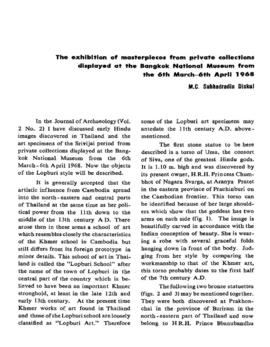
In commemoration of the 20th Anniversary of the International Council of Museums, the National council of museums of Thailand arranged an exhibition of masterpieces from private collections at the Bangkok National Museum from the 6th March-6th April 1968. Many famous art collectors in Bangkok participated in this exhibition from H.M. the King downwards and it was attended by 77,235 visitors. Now the objects of the Lopburi style will be described.

ศ. ม.จ. สุภัทรดิศ ดิศกุล

The Exhibition of Masterpieces from private collections displayed at the Bangkok National Museum from the 6th March-6th April 1968 [part 2]

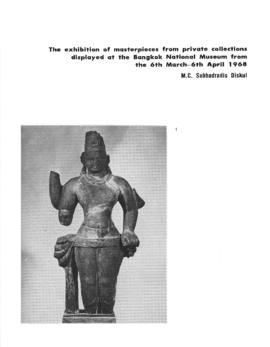
In commemoration of the 20th Anniversary of the International Council of Museums, the National council of museums of Thailand arranged an exhibition of masterpieces from private collections at the Bangkok National Museum from the 6th March-6th April 1968. Many famous art collectors in Bangkok participated in this exhibition from H.M. the King downwards and it was attended by 77,235 visitors. Art specimens of the two following periods, the early Hindu images in Thailand and Srivijai will be described in this volume.

ศ. ม.จ. สุภัทรดิศ ดิศกุล

The Exhibition of Masterpieces from private collections displayed at the Bangkok National Museum from the 6th March-6th April 1968 [part 1]

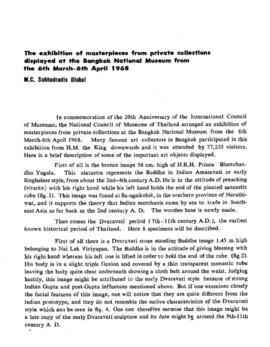
In commemoration of the 20th Anniversary of the International Council of Museums, the National council of museums of Thailand arranged an exhibition of masterpieces from private collections at the Bangkok National Museum from the 6th March-6th April 1968. Many famous art collectors in Bangkok participated in this exhibition from H.M. the King downwards and it was attended by 77,235 visitors. This volume mentions the ancient objects of Indian Amaravati or early Singhalese and of Dvaravati styles.

ศ. ม.จ. สุภัทรดิศ ดิศกุล

The Difference Between Valmiki’s Ramayana and the Thai Version of Ramayana (Ramakirti) of King Rama I of Thailand (1782-1809)

The story of the Ramayana has been very popular in Thailand; there are many versions of the story. It is pronounced in Thai as Ramakian, which probably derives from the word Ramakirti in Sanskrit. The word Rama existed already during the Sukhothai period (about 1250-1450 AD). The story of the Ramayana was referred to several times in Thai literature during the Ayutthaya period (1350-1767 AD) but the extant manuscripts for dance drama exist only from the Thonburi period (1767-1782 AD).

ศ. ม.จ. สุภัทรดิศ ดิศกุล

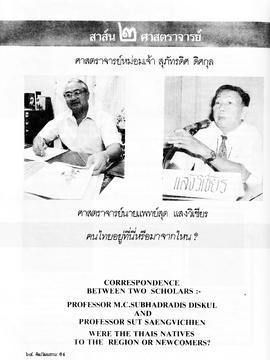
สาส์น 2 ศาสตราจารย์ ศจ. ม.จ. สุภัทรดิศ ดิศกุล ศจ. น.พ. สุด แสงวิเชียร : คนไทยอยู่ที่นี่หรือมาจากไหน?

จดหมายระหว่าง ศาสตราจารย์ ม.จ.สุภัทรดิศ ดิศกุล และ ศาสตราจารย์ นายแพทย์สุด แสงวิเชียร เกี่ยวกับคนไทยในดินแดนไทยเมื่อ 4,000 ปี มาแล้ว ศาสตราจารย์ ม.จ.สุภัทรดิศ เคยแสดงปาฐกถาเรื่อง ทับหลัง 4 ชิ้น จากประสาทเขาน้อย อำเภออรัญประเทศ จังหวัดปราจีนบุรี (ปัจจุบันจังหวัดสระแก้ว) ว่า “ปราสาทที่สร้างอยู่ในดินแดนประเทศไทยนั้น เข้าใจว่าเป็นของช่างอีกพวกหนึ่งไม่ใช่พวกช่างเขมร แต่เป็นช่างที่อยู่ในบริเวณใกล้กับปราสาท” ศาสตราจารย์นายแพทย์สุด คิดว่า น่าจะเป็นช่างพื้นเมืองซึ่งอาจเป็นคนไทยที่ลอกเลียนแบบจากฝีมือช่างเขมร ซึ่งจากการขุดค้นที่ จังหวัดกาญจนบุรี สรุปได้ว่า อาจมีคนไทยอยู่ในดินแดนไทยอย่างน้อยประมาณ 4,000 ปี แต่ ศาสตราจารย์ ม.จ. สุภัทรดิศ เชื่อว่า คนไทยอพยพมาจากภาคตะวันออกเฉียงใต้ของประเทศจีนตามหลักทางด้านภาษาศาสตร์ ศาสตราจารย์ นายแพทย์สุด เห็นด้วยว่า ไม่สามารถพิสูจน์ได้ว่าโครงกระดูกของคนผิวเหลืองนั้นเป็นคนไทย แต่เสนอสิ่งที่มนุษย์เมื่อ 4,000 ปี ในดินแดนประเทศไทยทำขึ้นใช้ในการดำเนินชีวิต คือ เครื่องมือหินขัด เครื่องปั้นดินเผา ลูกรอก (pulley) การควั่นงาช้างทำเป็นลูกปัด และเครื่องขุดทำจากหิน เป็นต้น.

ศ. ม.จ. สุภัทรดิศ ดิศกุล

ศิลปและประวัติศาสตร์สุโขทัย

บทความทรงวิจารณ์ของศ. ม.จ.สุภัทรดิศ ดิศกุล ภายในกล่าวถึงบทความ "ศิลปสมัยสุโขทัย" ของ ศาสตราจารย์ศิลป พีระศรี นายเขียน ยิ้มศิริ แปลต้นฉบับภาษาอังกฤษ บทความ "ประวัติศาสตร์สุโขทัย" นางจิรา จงกล เรียบเรียง บทความ "การเมืองของสุโขทัยจากศิลาจารึกหลักที่ ๔๕ และ ๖๔" นายนิคม มูสิกะคามะ เรียบเรียง และบทความ "ประเพณีไทยสมัยสุโขทัย" น.ส.ทัศนีย์ นาวิกชีวิน เรียบเรียง

ศ. ม.จ. สุภัทรดิศ ดิศกุล

วิวัฒนาการของประติมากรรมสมัยทวารวดี

ศิลปะทวารวดีภายในประเทศไทยเจริญขึ้นระหว่างราวพุทธศตวรรษที่ 12 – 16 ทางภาคกลางของประเทศไทย มีศูนย์กลางอยู่ที่เมืองนครปฐม คูบัว อ่างทอง และลพบุรี และได้แผ่ขึ้นไปทางเหนือยังอาณาจักรหริภุญชัย (ลำพูน) จนกระทั่งถึงราวต้นพุทธศตวรรษที่ 19 ประติมากรรมสมัยทวารวดีส่วนใหญ่สร้างขึ้นในพุทธศาสนา ได้รับอิทธิพลมาจากศิลปะอินเดียสมัยคุปตะและหลังคุปตะ แต่ก็ยังคงแสดงถึงอิทธิพลของศิลปะอินเดียสมัยอมราวดีซึ่งเข้ามาถึงก่อนหน้านั้น ตัวอย่างของศิลปะทวารวดีสมัยต้น ได้แก่ 1) พระพุทธรูปยืนศิลาขนาดเล็ก ครองจีวรตามแบบอมราวดีแต่จีวรไม่มีริ้ว แสดงปางประทานอภัยหรือวิตรรกะ 2) พระพุทธรูปนาคปรกศิลา ค้นพบที่เมืองฝ้าย อำเภอลำปลายมาศ จังหวัดบุรีรัมย์ 3) พระพุทธรูปศิลาปางสมาธิ ค้นพบในถ้ำเขาพระ อำเภออู่ทอง จังหวัดสุพรรณบุรี 4) ประติมากรรมดินเผา ค้นพบที่เมืองคูบัว อำเภอเมือง จังหวัดราชบุรี 5) ประติมากรรมดินเผาค้นพบที่อำเภออู่ทอง จังหวัดสุพรรณบุรี 6) เทวรูปพระคเณศศิลา ค้นพบที่เมืองพระรถ ดงศรีมหาโพธิ จังหวัดปราจีนบุรี ตัวอย่างศิลปะทวารวดีสมัยที่สอง ได้แก่ 1) พระพุทธรูปยืนศิลาองค์ใหญ่ พบที่ดงศรีมหาโพธิ จังหวัดปราจีนบุรี 2) พระพุทธรูปยืนสัมฤทธิ์ สูง 1.20 เมตร ค้นพบที่เมืองฝ้าย อำเภอลำปลายมาศ จังหวัดบุรีรัมย์ พร้อมกับประติมากรรมรูปพระศรีอาริยเมตไตรย 2 องค์ สูง 47 เซนติเมตร และสูง 1.37 เมตร ศิลปะทวารวดีสมัยที่สาม อิทธิพลศิลปะขอมสมัยบาปวนเริ่มเข้ามาปะปน ตัวอย่างที่ดีที่สุดคือ พระพุทธรูปปางสมาธิศิลา ค้นพบ ณ วัดพระศรีรัตนมหาธาตุ จังหวัดลพบุรี.

ศ. ม.จ. สุภัทรดิศ ดิศกุล

วิจารณ์แบบศิลปในประเทศไทย ของ ดร. พิริยะ ไกรฤกษ์

ผู้เขียนมีความเห็นตรงกันกับ ดร.พิริยะ ไกรฤกษ์ ที่เห็นว่า คำว่า สมัยทางประวัติศาสตร์ และแบบของศิลปะนั้น เป็นระยะเวลาต่างกัน ไม่ควรนำมาใช้ปะปนหรือใช้แทนกัน แต่ไม่เห็นด้วยกับการเสนอให้ใช้คำว่าศิลปะมอญ แทนคำว่า ศิลปะทวาราวดี พร้อมทั้งยอมรับว่า คำว่า ศิลปะลพบุรี ที่ใช้อยู่ในปัจจุบันไม่เหมาะสมตามที่ ดร.พิริยะ กล่าว สำหรับศิลปะไทยที่เสนอให้แบ่งออกตามท้องถิ่น ผู้เขียนไม่เห็นด้วยเพราะคงจะมีมากมายหลายสกุลช่างจนเป็นการยุ่งยากแก่นักศึกษา รวมทั้งเรื่องที่เสนอให้นำศิลปะอู่ทองมารวมกับ ศิลปะอยุธยา และเรียกว่า ศิลปะอยุธยา ส่วนศิลปะรัตนโกสินทร์ที่ ดร.พิริยะ กล่าวว่า เกิดขึ้นในต้นพุทธศตวรรษที่ 25 หรือตั้งแต่สมัยรัชกาลที่ 4 ลงมา และเสนอให้เรียกศิลปะก่อนหน้านั้นว่าศิลปะอยุธยา ผู้เขียนไม่เห็นด้วย สำหรับการศึกษาศิลปะศรีวิชัย หรือศิลปะทางภาคใต้ของประเทศไทย ผู้เขียนมีความเห็นคล้อยตามว่าควรจะแยกศึกษาจากกำเนิดที่มาต่าง ๆ กัน นอกจากนั้น ผู้เขียนยังวิจารณ์โบราณวัตถุที่นำมาจัดตั้งแสดงตามรูปในหนังสือ เฉพาะในส่วนที่มีความเห็นแตกต่างกับ ดร.พิริยะ เท่านั้น.

ศ. ม.จ. สุภัทรดิศ ดิศกุล

Results 21 to 30 of 73